
Outstanding Warrants in Huron County
An outstanding warrant is a signed court order that has not yet been served, withdrawn, or satisfied. In Huron County, that order sits inside a court file rather than on a public web page. The word active covers situations that feel very different. A bench warrant from a missed court date counts as active. So does an arrest warrant on a new charge. A warrant the judge has recalled does not, even if an old copy of the paperwork still floats around somewhere. Paper goes stale in a drawer. The live record is the docket. That is why the real answer has to come from a clerk who can read it, not from any page that simply echoes old files.
Why No Huron County Warrant List Exists
The Huron County Sheriff's Office posts no public warrant roster. There is no search field, no status filter, and no downloadable list on its pages. What the office does publish is contact information, division names, a records route, and a tip program. That does not mean the county has no warrants. It means Huron County has chosen not to publish a running list of names, which is common across Michigan. A published list ages the moment it prints, and the agency keeping it then answers for stale entries. So a search that finds nothing tells you just one thing. It proves you found no list, not that no warrant exists. The Huron County Sheriff's Office page is the official place to start when you want to ask whether that office holds a record.
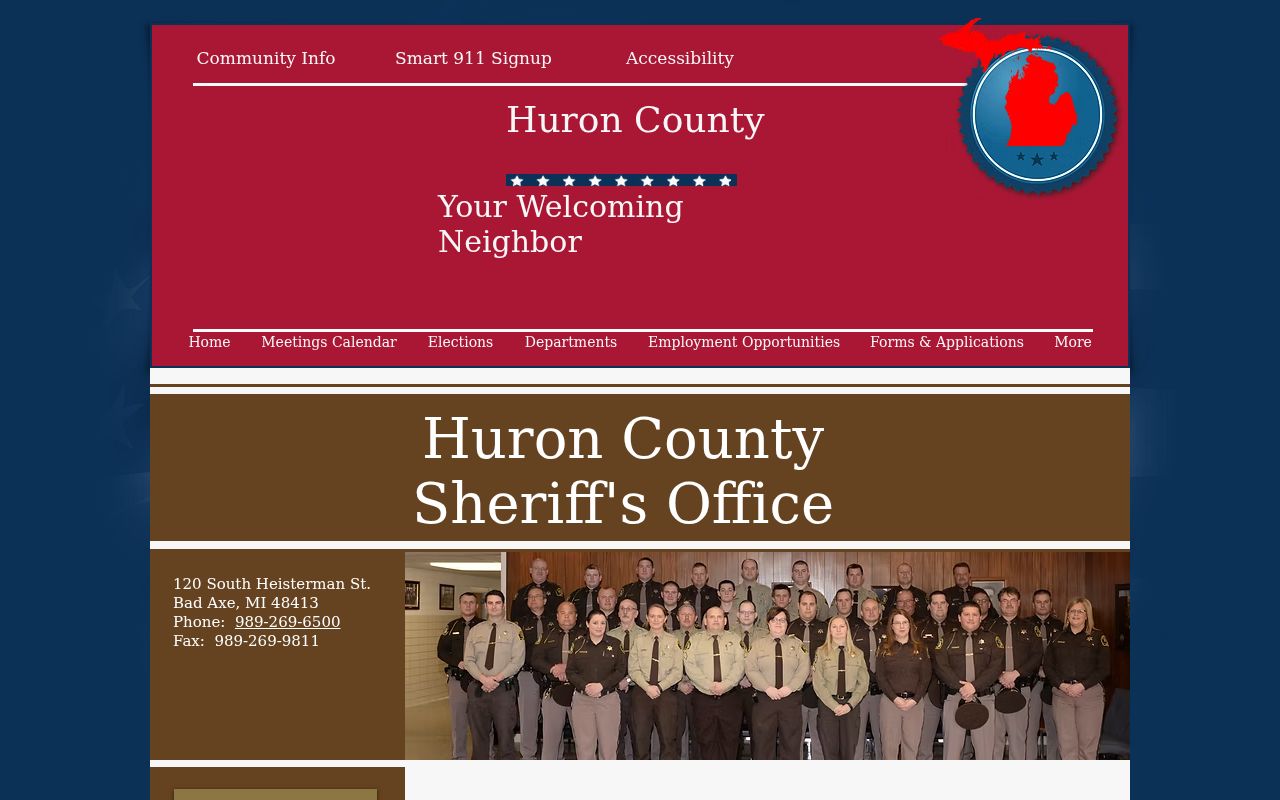
The Sheriff's page names its divisions: Records, Civil Process, Road Patrol, the Detective Bureau, and Jail Staff. Huron County posts no public warrant search desk among them.
The Huron County Active Warrant List
Huron County has no true warrant list. What exists is a set of systems, each covering one slice of the picture. Read them side by side and you see how fast a search can miss the file that matters.
| System | Who Can See It | What It Answers |
|---|---|---|
| Huron County sheriff pages | Public | Contacts and tip routes, with no warrant roster published |
| 73B and circuit clerks | Anyone who calls | What the docket in that court shows right now |
| MiCOURT case search | Public | A pointer to a public case, not the official record |
| ICHAT criminal history | Public, paid | A history summary that excludes warrant information |
| LEIN | Authorized agencies only | Law-enforcement data the public cannot query |
No single row settles a Huron County warrant question by itself. The two rows the public can reach each carry real limits.
Active Warrants: What They Show
A warrant record is thin on the outside and specific on the inside. What a Huron County clerk can confirm by phone is narrower than what the file holds. Both are narrower than what a database screen might lead you to expect.
| Court and case number | The court that holds the case, written with an 73B or 52nd prefix. |
|---|---|
| Warrant type | Arrest warrant, bench warrant, or a show-cause matter that has not yet become either. |
| Charge or reason | The offense charged, or the obligation the person did not meet. |
| Issuing officer | The judge or magistrate who signed, described by role rather than by name. |
| Status | Active, served, recalled, or quashed, as the docket reads today. |
Note: Ask for the case number and the court name on your first call to a Huron County clerk, because every later question gets easier once you have both.
Whose Job Is a Huron County Warrant
Four offices touch a Huron County warrant, and each owns a different piece. The prosecutor reviews the police request and decides the charges. A district judge or magistrate signs the warrant. A peace officer serves it. The clerk keeps the file that shows all of it. The Sheriff's Office enforces warrants and holds police records, but it is not the court clerk. A city police department can hold the report behind a case without holding the warrant. Mixing up those roles is the most common way a warrant check goes wrong. When someone says the police cannot find a record, that answer covers one office only, and it says nothing about the docket in Room 105 or Room 207.
Tip Lines and Huron County Warrants
Huron County publishes two tip channels, and both exist to take information in, not hand it out. The Sheriff's confidential line and the Crime Stoppers program receive reports about crime, and Crime Stoppers can pay a reward when a tip leads to a felony arrest. Neither one is a records counter. A caller who asks a tip line to confirm a warrant is at the wrong desk. The answer will not be reliable either way. For a real status check in Huron County, go to the court.
Keep these separate:
The Sheriff's confidential tip line takes information about a crime.
Crime Stoppers takes anonymous tips and can pay a reward for a felony arrest.
Neither line confirms, recalls, or explains a court warrant.
For your own status, call the court that holds the case.
Checking Your Own Huron County Warrant
A personal warrant check in Huron County follows a short path. This order works best. Stop as soon as the court holding your case can read you the docket.
- Decide whether the matter is a traffic or misdemeanor case, a bound-over felony, or a family case.
- Call the court that matches: the district court, the County Clerk and circuit court, or the family division.
- Give the legal name, a date, and any case or citation number, and ask what the docket requires next.
- Ask whether a written record would help, and speak with an attorney before acting on a serious case.
The state criminal-history page spells out why a history check does not belong on that list in Huron County.
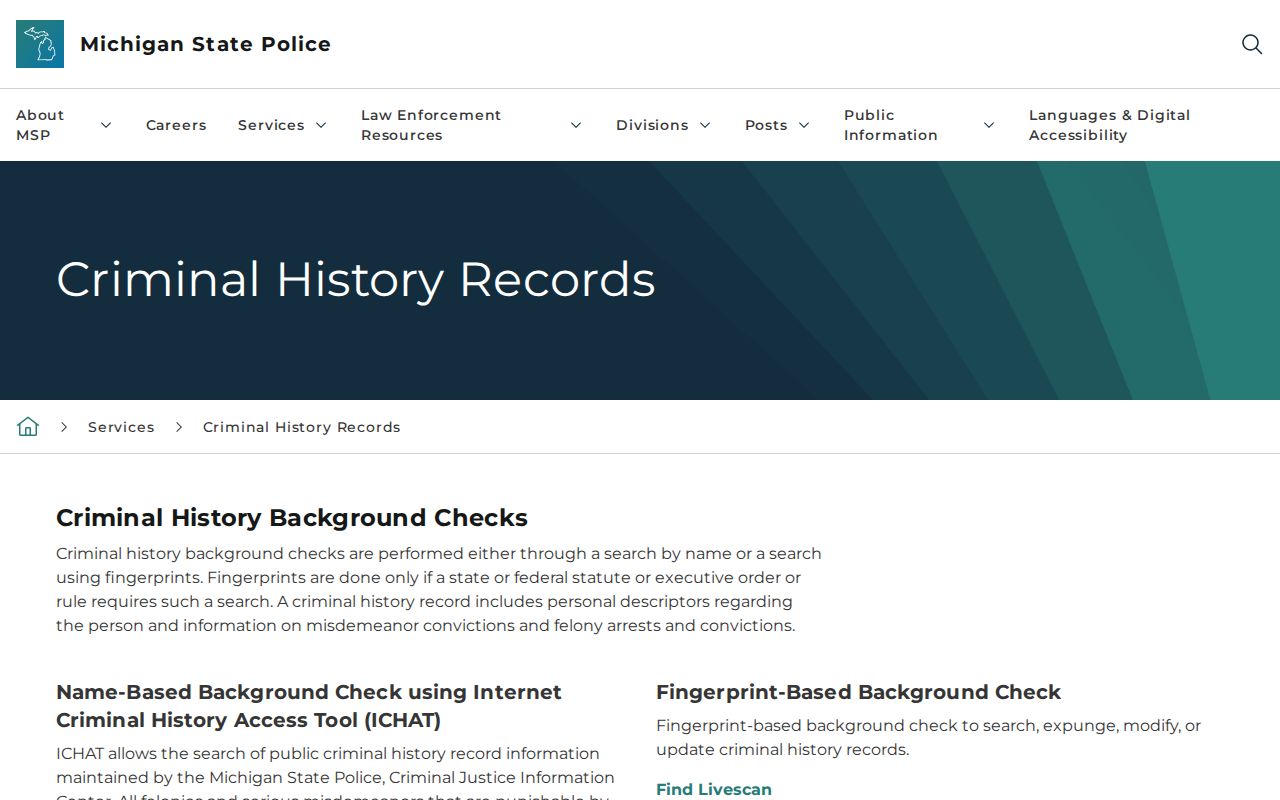
The state says it plainly: warrant information is not part of its public history product. That leaves the Huron County courts.
Huron County Warrant Roundups
Counties elsewhere run amnesty weeks that clear old warrants in bulk. Huron County does not. No sheriff, court, prosecutor, or city page announces one. The district court does publish a collections process instead. Its pages describe payment plans, wage withholding, tax garnishment, and prison commissary collection. Each tool works on a debt. None of them cancels a warrant. If a roundup appears later, it will come from a court or law-enforcement office with dates, eligibility rules, and a named sponsor. A social-media post is not that. Neither is a paid clearing service.
Finding Your Own Name on the List
Finding your own name on a Huron County warrant list is jarring. Do not call a tip line. Do not walk into a police lobby either. The issuing court can confirm or correct the entry. Call the court and give the case number if you have one. Ask what the docket shows. Then ask which step comes next: an appearance, a show-cause hearing, a payment, a bond, or a motion to recall or quash the warrant.
Act with advice. An active warrant can lead to detention, so speak with a Michigan attorney before arranging any appearance, and do not rely on a warrant-clearing service.
A wrong Huron County entry needs the signing court's correction. A lawyer can ask for that correction in the proper form.
When a Huron County Warrant Goes Federal
Huron County sits in the Eastern District of Michigan. Federal cases run on their own track. No county clerk can confirm a federal warrant. A county warrant search cannot rule one out either. The nearest listed federal office sits in Bay City. The federal court system keeps its own records through its own docket service. Someone who thinks a federal matter may apply should talk to counsel. Do not test the question at a counter. The boundary cuts both ways. A state history check leaves federal records out, so a thin Michigan result says nothing about a federal file.