
How Arrest Warrants Work in Huron County
An arrest warrant is a court order. It lets a peace officer take a named person into custody, which moves the charge from a police file into a court file. Probable cause comes first. Michigan court rules require it before a judge signs. The warrant must name the person, state the offense, direct a peace officer to act, and carry a judicial signature. In Huron County, a District Court judge or magistrate supplies the signature from Room 105 of the County Building. Felony cases begin there. They reach the circuit court only after a bindover or a waived preliminary examination. Every Huron County felony walks that same route.
From Huron County Complaint to Signed Warrant
Huron County splits this work between offices. The prosecutor's criminal case process page lays out the sequence, which explains why no single office can answer every question about one case.
- An officer investigates an incident and may make an arrest during that work.
- The officer sends a warrant request to the Huron County Prosecutor.
- The prosecutor reviews the request, decides the charges, and can deny it.
- An authorized complaint and warrant go to a District Court judge or magistrate for signature.
- An arraignment follows, and a felony case can later bind over to the circuit court.
The prosecutor's criminal case process page describes that path in the office's own words.
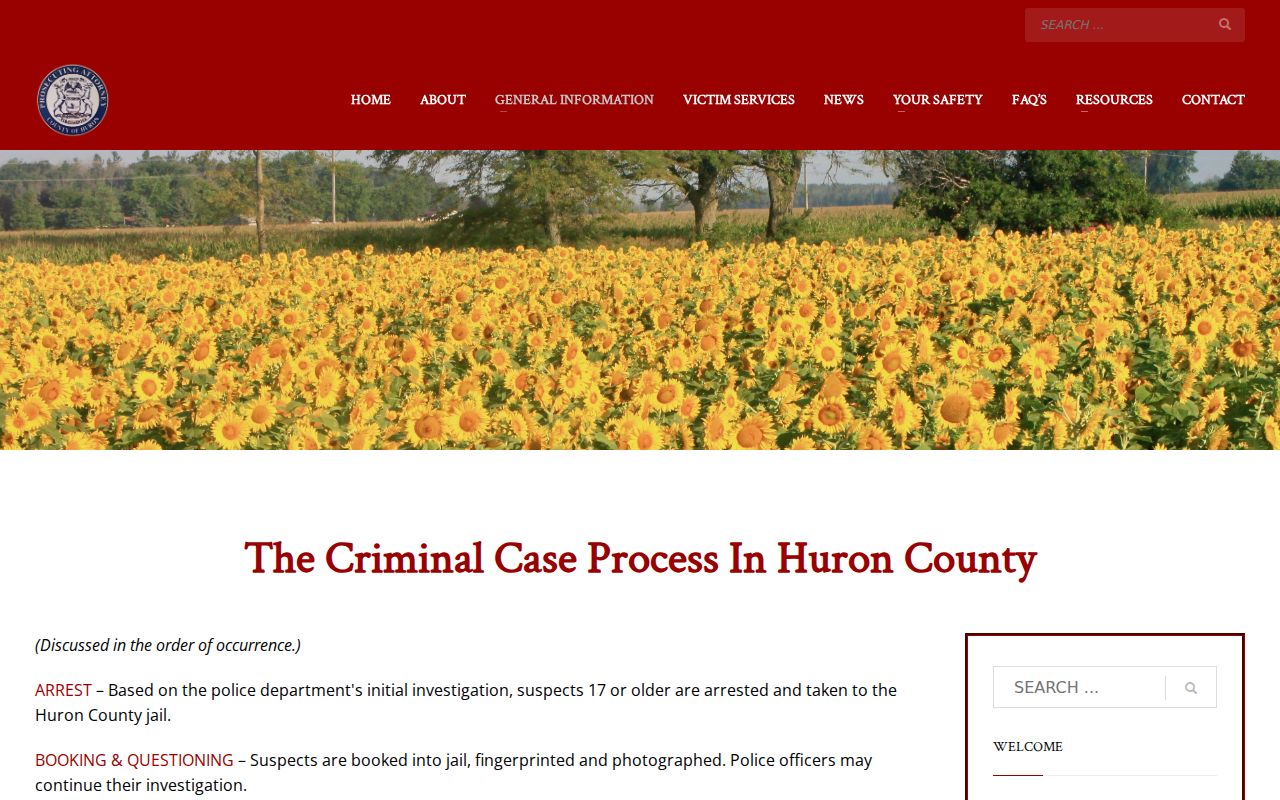
That order matters when you call. A Huron County police department can confirm a report; only the court can confirm a warrant.
Arrest Warrants: What They Contain
Court rules set a warrant's contents. The local Huron County file fills in the rest. What a clerk reads over the phone is narrower than what the judge saw, and both run narrower than a reader might expect.
| Case number | The court and file number, written with a 73B or 52nd prefix. |
|---|---|
| Name or description | The person named on the warrant, or a description when the name is unknown. |
| Offense | The charge and the statute it comes from. |
| Command to an officer | The line that authorizes a peace officer to take the person into custody. |
| Issuing officer | The judge or magistrate who signed, described by role in public answers. |
| Status | Whether the warrant is active, served, recalled, or quashed. |
No published Huron County source prints bond on the warrant. Ask the court or the jail for the current instruction rather than assuming an amount.
Huron County Warrant Requests and the Prosecutor
Two offices make two separate calls. Merging them is where most Huron County confusion starts. The prosecutor owns the charging decision. That office reviews what police gathered, decides whether a charge is supported, and drafts the complaint when it is. Then the judge or magistrate handles the probable-cause review. It is a separate look at the same facts from a neutral seat, and it is the step that turns a request into court process. A denial can happen. The prosecutor may reject a warrant request, which leaves an incident report with no warrant behind it. That is why a police agency's file is not proof of a court order. The prosecutor's FAQ page confirms who submits the request and who authorizes the complaint.
A warrant request is a question. The same page reminds Huron County readers that the answer can be no.
How Warrants Get Served in Huron County
Once a warrant is signed, a peace officer or another authorized person can execute it. Service is the enforcement half of the process. In Huron County that means the Sheriff's Office, a city or village police department, or another agency with authority over the case. The Huron County prosecutor's contact list names the local departments. They sit in Bad Axe, Caseville, Elkton, Harbor Beach, Kinde, Owendale, Pigeon, Port Austin, Sebewaing, and Ubly. The Sheriff's Office is on it too. No constable or municipal marshal handles service here. Being served just advances the case. It moves to the next court date, where the person can appear, be represented, and answer the charge.
Huron County Warrant Files After Bindover
A felony begins in district court. It does not stay there. After a preliminary examination, or a waiver of that hearing, the Huron County case transfers to the circuit court, where two offices handle it.
52nd Judicial Circuit Court
Room 207, 250 E. Huron Ave, Bad Axe. Felony trials, family division, and appeals from lower courts.
989-269-7112
County Clerk and Circuit Records
Room 201 in the same building. This office keeps and processes the circuit court files.
989-269-9942
After a bindover, the district court counter may still know the name. Room 201 holds the Huron County file that answers questions.
Arrest Warrants, Summonses, and Bench Warrants
Michigan reaches a person with three kinds of criminal process. Each Huron County form decides whether custody is possible at first contact.
| Point | Arrest Warrant | Summons | Bench Warrant |
|---|---|---|---|
| How it starts | A charge supported by probable cause | A charge where the court orders an appearance | A missed date or unmet obligation |
| Custody at once | Possible | No, the person appears on the date | Possible, after a missed step |
| Where it lives | The court that issued it | The court that issued it | The court that already has the case |
| What to ask | Whether it is active and what bond applies | Which date and which courtroom | What the docket needs to move again |
Huron County publishes no public list of arrest warrants. In every one of these situations, the court file stays the source of truth.
Huron County Warrant Records Requests
The Sheriff's Records Office handles police-report information and accepts written public-records requests. That route reaches police paper. Huron County court paper lives elsewhere.
Key Rules:
A written request should describe one record as specifically as possible, with a date, a case reference, or an incident number.
The office may release part of a record, hold part back, or ask for a fee before it does the work.
A broad request for every active warrant is not a service the county publishes.
Court files follow different access rules, so a records request is not the way to see a docket.
The Sheriff's Records Office page explains what Huron County residents can request and how the office handles appointments.
The jail page covers visitation and inmate money. Neither is a Huron County bond instruction.
Handling an Arrest Warrant in Your Name
An arrest warrant is the one type where a wrong step can end in custody. Order of operations beats speed. The Huron County court that signed the warrant is the office that can tell you what it requires.
- Call the issuing court and ask whether the warrant is active, and what the docket requires next.
- Speak with a Michigan attorney before you arrange any appearance.
- Ask about bond, an arraignment date, and whether a motion to recall or quash is possible.
- Do not call a tip line, and do not ask a police lobby desk to sort out a court order.
Plan before you appear. Huron County publishes no surrender window and no standard bond amount, so an unplanned walk-in can lead to detention.
Keep your address current with the clerk too. A Huron County notice that never arrives is how some of these cases begin.
When a Huron County Warrant Goes Federal
Federal warrants work differently in Huron County, because the county sits in the Eastern District of Michigan and federal charges never pass through the state courts. No Huron County court or clerk can confirm one. A state search rules nothing out either. The nearest listed federal location sits in Bay City, and its records live in the federal system rather than Michigan's state courts. Anyone who expects a federal matter should go through counsel. The federal clerk is the other route. Note: A state criminal-history check leaves federal records out, so a clean Michigan result says nothing about a federal file.