
Inside the Huron County Most Wanted Program
Most wanted programs serve two purposes. They spotlight a handful of cases, and they give the public one easy way to pass along what they know. In many counties the sheriff posts a page with names and photographs, and tips flow back through it. Huron County runs only the second half of that model. The Sheriff's Office publishes anonymous reporting channels and a reward program, yet it posts no roster of wanted names. So a reader here has to adjust expectations. There is no page to scroll. There is no photo to compare and no way to search a name on a wanted list. What Huron County does have is a channel for information. And for questions about a specific case, the courts are the offices that can answer.
What the Huron County Sheriff Publishes on Warrants
The Sheriff's Office page lists its address, phone, divisions, and tip contacts. Its divisions cover Records, Civil Process, Road Patrol, the Detective Bureau, and Jail Staff. None of those units runs a public warrant desk. The Records side gets its own page. It covers police-report information, public-records requests, and fingerprint appointments, so it is the right stop for a report and the wrong one for a warrant question. The Sheriff's Records Office page lays out the office's own services, and a Huron County warrant search is not one of them.
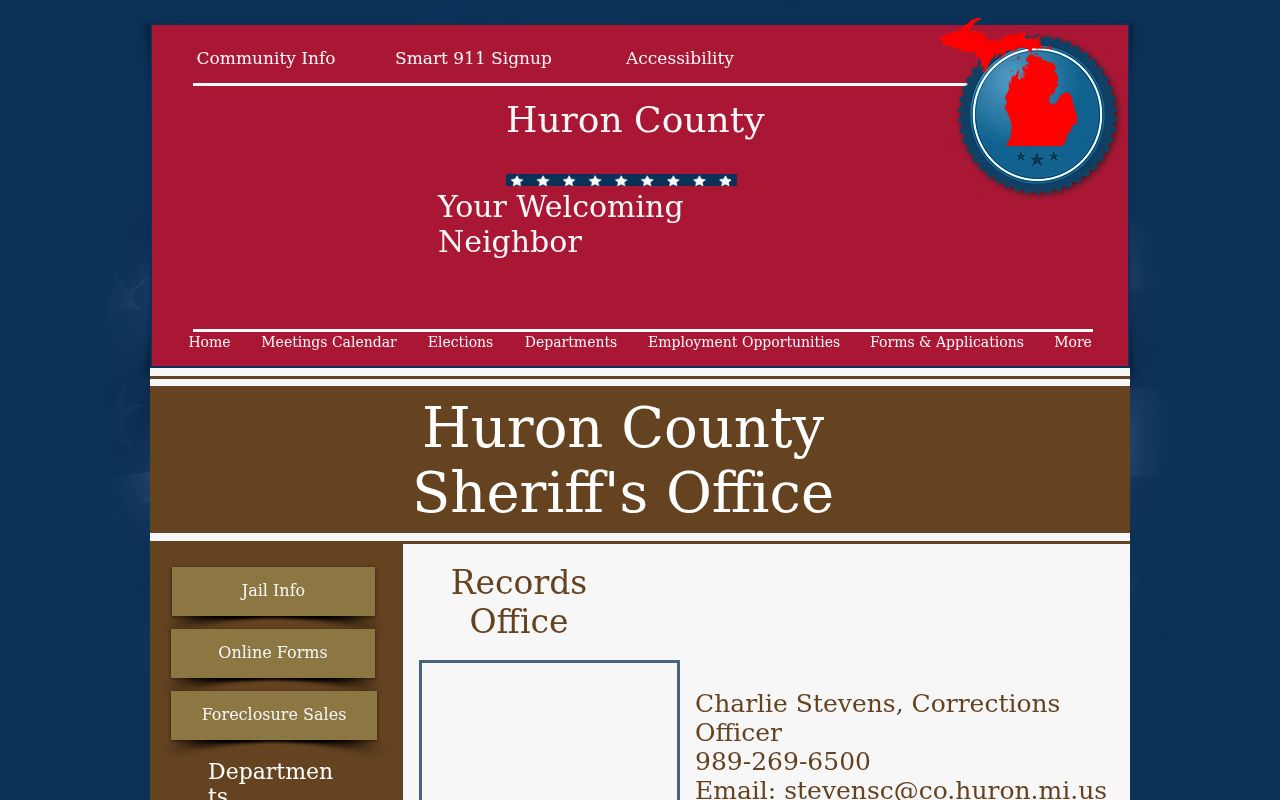
Fingerprinting by appointment shows the pattern. It is a listed service, and it has nothing to do with a Huron County warrant.
How Huron County Most Wanted Lists Work
A most wanted list is a chosen subset, not a full file. Someone picks the cases, sets how many appear, and decides how often the page gets refreshed. That editing step is why a list can help and still miss plenty. The bigger category is the active warrant itself, which lives in a court file. Most active warrants never show up on a wanted page. A case can also close on the docket while an old poster still makes the rounds online. Huron County posts no wanted list at all, so there is no update schedule to check. If one appears later, watch its notice date more than its layout. Note: treat any wanted page as a starting point and the court record as the answer, in this county and everywhere else.
Sending a Most Wanted Tip Safely
A tip works best when it is specific. A date, a place, a vehicle, and a pattern of movement help Huron County investigators far more than a vague impression.
Key Rules:
Use the anonymous tip channels rather than approaching anyone yourself.
Give times, places, and descriptions instead of conclusions about a person.
Do not use a tip line to ask about your own warrant, because that is not its purpose.
Call 911 rather than a tip line when a situation is happening right now.
Crime Stoppers
Anonymous information line, answered around the clock, with rewards possible when a tip leads to a felony arrest.
1-800-422-5245
Sheriff's confidential tip line
Report-a-crime line for information about activity in Huron County.
989-269-2861
Neither number confirms a Huron County warrant, recalls one, or explains a case. Keeping the tip lines separate from the courts is the whole point.
Huron County Warrant Tips and Rewards
Huron County's published Crime Stoppers material promises anonymity and a possible cash reward when information leads to a felony arrest. Those two features draw out people who would otherwise stay quiet. Anonymity works through the tip line itself. A caller never has to give a name, and the program routes the information to the agency investigating the case. The reward is neither automatic nor guaranteed. It follows a result, and the program decides when that threshold is met. Anyone who calls in Huron County should expect an explanation of how the process works, not a promise of payment.
How a Huron County Warrant Reaches Police
Information and process are two different tracks in Huron County. The second one decides where a case goes after a tip arrives.
- An officer investigates an incident and may make an arrest during that work.
- The officer submits a warrant request to the Huron County Prosecutor.
- The prosecutor reviews the request and decides the charges.
- A District Court judge or magistrate reviews and signs an authorized complaint and warrant.
- A peace officer serves the warrant, and an arraignment follows.
A tip can start that chain at step one. After that, the case belongs to the Huron County courts, and the tip line has no further role.
How Most Wanted Differs From an Active Warrant
Four systems touch the same idea and answer four different questions. Side by side, they show why no single one is complete in Huron County.
| Source | Who Runs It | What It Can Tell You |
|---|---|---|
| Most wanted list | A sheriff or a task force | A selected subset of cases, published for public attention |
| Active warrant | The issuing court | Whether an order exists in one case right now |
| Tip program | A sheriff or Crime Stoppers | Nothing about status, only where to send information |
| Restricted law-enforcement network | Authorized agencies | Data that the public cannot query at all |
Huron County publishes the third row and not the first. That is why a warrant question here ends at a court counter.
Public Records Limits on Huron County Warrant Information
Even where records are open, the law lets a court or agency hold some material back. That is not secrecy for its own sake, and it is no reason to assume the worst. State law keeps juvenile records confidential. Sealed files, search-warrant affidavits and returns, and material tied to an open investigation all sit behind specific limits. A written request can also be granted in part, denied in part, or answered with a fee estimate first. So a public-records request is a fair tool for a defined file in Huron County and a poor one for a running list of names. Ask for one record with a date and a description, then let the Huron County office decide what it can release.
When You Believe You Are Listed
Spotting your name on a Huron County wanted notice is frightening. Don't call the tip line, and don't walk into a police lobby. The office that can fix an entry is the court that issued the warrant. Call the Huron County court holding the case and give the case number if you have one. Ask what the docket shows and what step comes next. Then talk with a Michigan attorney before you arrange any appearance.
Ask before you appear. Huron County publishes no surrender window and no standard bond, and an active warrant can lead to detention.
Only the issuing court or the agency that published a wrong Huron County entry can take it down, whether it sits on a website or a social post.
Huron County Warrants and Federal Cases
Huron County sits inside the Eastern District of Michigan. Federal cases there follow federal process from the start. A county sheriff is not the office that handles a federal warrant, and no county search can rule one out. The nearest listed federal location is in Bay City, and federal court records live in the federal system rather than the state courts. Federal tip channels do exist for federal fugitive information. Use them for that, not for a state court question. The federal courthouse location page shows where the district sits, and none of it is inside Huron County.
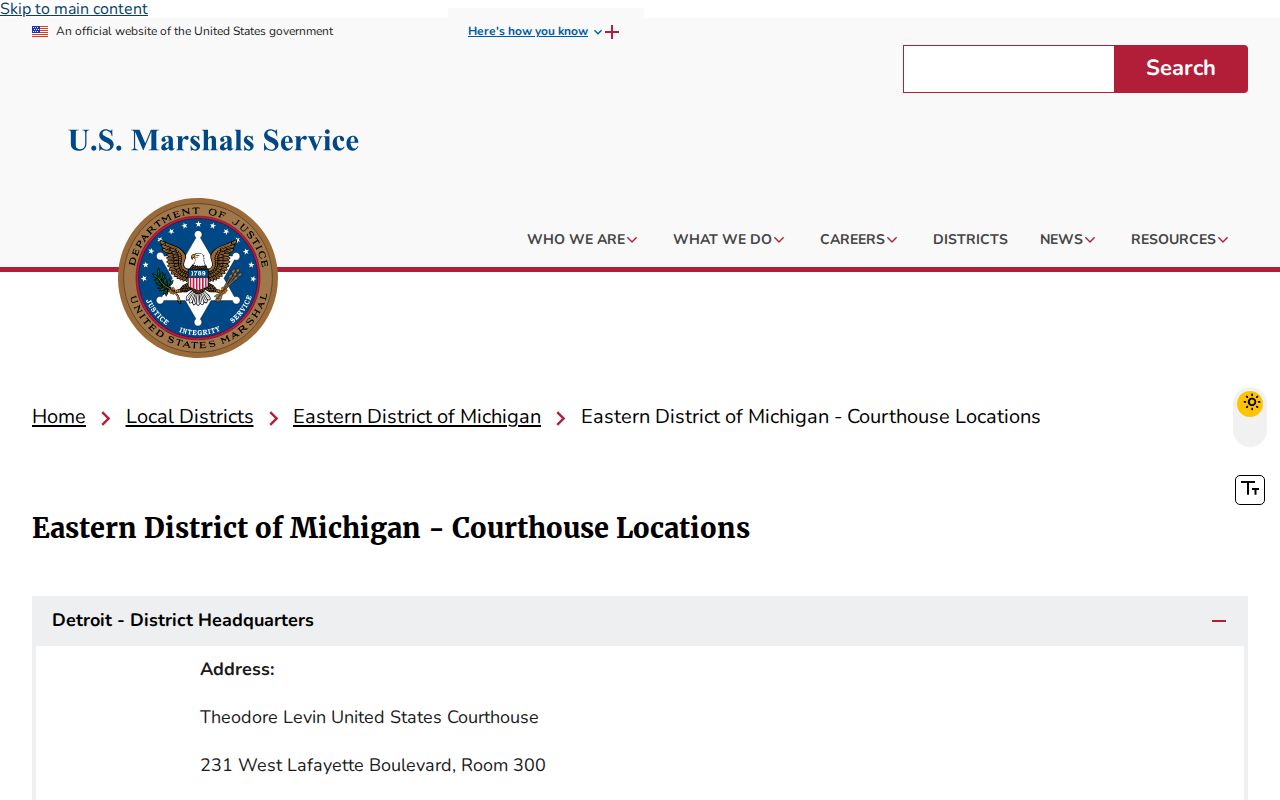
For a federal case, the Huron County court counter is the wrong door, and the federal clerk or counsel is the right one.